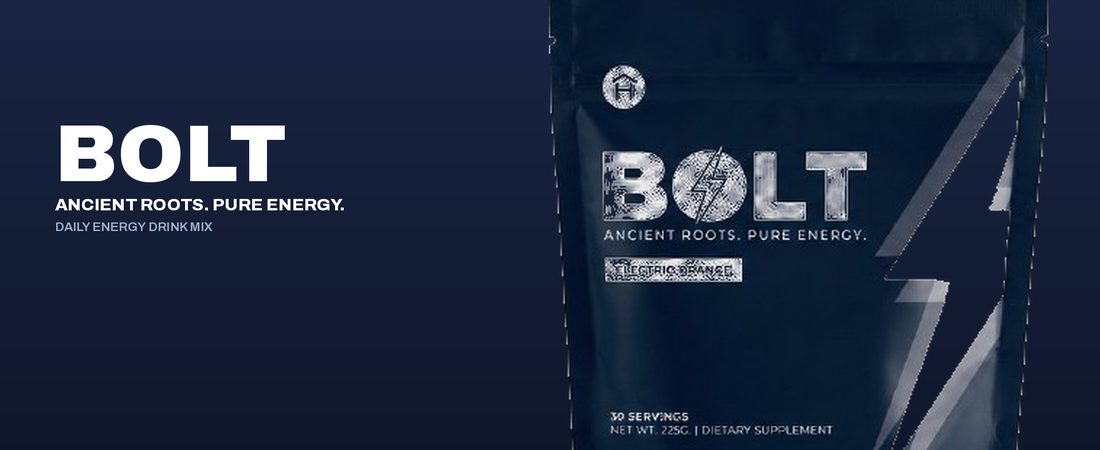
Ask ten people about the best time to drink an energy drink and you will hear ten rules: never before 10 a.m., always before the gym, never after lunch. Most of them are half right. Caffeine timing is less about the clock on the wall and more about three things: when you need to be sharp, whether you have eaten, and how many hours are left before you want to sleep. This guide walks through the morning, the workout, and the afternoon slump, gives you the research-based cutoff before bed, and shows where a scoop of BOLT™, HealthyHome’s daily energy drink mix, fits.
BOLT™ Energy content here is operated by All In Enterprises, LLC, independent HealthyHome distributors. BOLT™ is HealthyHome’s energy drink mix. HealthyHome owns and fulfills the product. We do not. This is product and wellness education, not medical advice. We may earn a commission when you shop or join through our links.
Disambiguation: This hub is about HealthyHome’s BOLT energy drink mix, not Bolt24, Blue Bolt, or other similarly named drinks you may see in national search.
The short answer
The best time to drink an energy drink is roughly 30 to 60 minutes before you need to be at your sharpest, with or after food, and early enough in the day that the caffeine is mostly gone by bedtime. For most people on a regular schedule, that means morning to early afternoon. The rest of this page explains why, and how to adjust it for workouts and late shifts.
How caffeine timing works
Caffeine is absorbed quickly. MedlinePlus notes that it reaches its peak level in your blood within about an hour and its effects can last four to six hours (MedlinePlus: Caffeine). It works mainly by blocking adenosine, the chemical that builds sleep pressure the longer you are awake (Sleep Foundation). Two practical takeaways follow:
- Drink it a little before you need it, not at the moment you are already fading.
- Caffeine lingers longer than the buzz. You can stop feeling it hours before it stops affecting your sleep.
How fast you clear caffeine varies a lot from person to person. Pregnancy, some medications, and individual sensitivity can all stretch it out, which is why one friend can have an evening coffee and sleep fine while another lies awake.
Morning: right away or after breakfast?
You will see claims that you must wait 90 minutes after waking because of cortisol. The research behind a strict wait is thin. A more useful morning rule is simple: have something to eat and a glass of water first. Caffeine on an empty stomach bothers some people, and using an energy drink as breakfast sets up a mid-morning slump that has nothing to do with the drink.
For a typical workday, a scoop with or shortly after breakfast, or mid-morning when your first meeting or drive starts, lines the peak up with the part of the day you need it most.
Before a workout
The International Society of Sports Nutrition’s position stand notes that caffeine is commonly taken about 60 minutes before exercise, and that studies typically use doses scaled to body weight (Guest et al., JISSN 2021). In practice, 30 to 60 minutes before you start works for most people.
Two cautions. First, BOLT is a daily energy drink, not a high-stimulant pre-workout, so do not double scoops to imitate one. Our energy drink mix vs pre-workout page explains the difference. Second, evening workouts and caffeine are a tricky pair. If you train after work, consider training without it or keeping the dose small, because the cutoff math below still applies.
The afternoon dip
Feeling sluggish after lunch is normal. Your body clock has a natural dip in alertness in the early afternoon, and a heavy meal can make it more noticeable. This is the moment most people reach for a second or third drink.
If you need a lift, an early-afternoon scoop can help, but it is also the most common way people end up sleeping worse and crashing harder the next day. A short walk, daylight, water, and a lighter lunch often do more than you expect. If you do drink, swap rather than stack: let BOLT replace a coffee instead of adding to it. Our guide to an energy drink without the crash covers why the slump happens.
The cutoff: how late is too late?
A 2023 systematic review and meta-analysis of 24 studies found caffeine reduced total sleep time by about 45 minutes on average. To avoid that loss, the authors estimated that a cup of coffee (107 mg of caffeine) should be finished at least 8.8 hours before bed, and a standard pre-workout serving (217.5 mg) at least 13.2 hours before bed (Gardiner et al., Sleep Medicine Reviews).
With a 10 p.m. bedtime, that is about 1 p.m. for a coffee and about 9 a.m. for a pre-workout. BOLT’s labeled serving of about 170 mg falls between those two doses, so a sensible rule if you sleep around 10 p.m. is to finish your scoop by late morning, and no later than early afternoon. Go earlier if you are caffeine-sensitive or go to bed early.
When to skip it
- Within several hours of bedtime, using the cutoff above.
- On top of other caffeine that already puts your day near the FDA’s 400 mg reference amount for healthy adults (FDA: How much caffeine is too much?).
- If you are pregnant, nursing, under 18, caffeine-sensitive, have a heart condition, or take medication, unless your clinician says it is fine.
- When you feel unwell, jittery, or your heart is racing. Stop and rest.
Three sample schedules
- 9-to-5 desk day, 10:30 p.m. bedtime: breakfast at 7:30, BOLT around 9:00, water through the day, a walk after lunch instead of a second drink.
- 6 a.m. gym, 9:30 p.m. bedtime: a small snack at 5:15, BOLT at 5:20, workout at 6:00, no more caffeine after late morning.
- Late shift, sleeping at 3 a.m.: shift your clock, not just the drink. Have it near the start of your shift and stop well before the last part of it, using the same hours-before-sleep idea.
Where BOLT fits
- About 170 mg of caffeine from natural sources per labeled serving, one number you can plan around. Details: BOLT caffeine content.
- L-theanine and inositol in the focus system, for a clearer, less wired feel.
- Magnesium, potassium, and sea salt in the hydration system, useful on workout and hot days.
See all six ingredient systems on the BOLT ingredients page. Always read the pouch you hold; the label is the source of truth for serving size and directions.
Shop or Join (All In Enterprises, LLC)
HealthyHome handles payment, shipping, and fulfillment. All In Enterprises, LLC are independent distributors. Your two doors:
Shop BOLT on HealthyHome · Join & Get Member Pricing
Shop for customer pricing, including subscribe options where HealthyHome offers them. Join for member pricing and the optional ability to share; earnings are never guaranteed. New to ordering? Our how to buy BOLT guide walks through it.
FAQ: best time to drink an energy drink
What is the best time to drink an energy drink?
About 30 to 60 minutes before you need to be sharp, with or after food, and early enough that most of the caffeine has cleared by bedtime. For most people that means morning to early afternoon.
Should I drink an energy drink right after waking up?
There is no strong evidence you must wait a set time. Eating something and drinking water first is the more useful rule, especially if caffeine on an empty stomach bothers you.
How long before a workout should I drink an energy drink?
Caffeine is commonly taken about 30 to 60 minutes before exercise. For evening workouts, keep the dose small or skip it so it does not cut into your sleep.
What time should I stop drinking caffeine?
A 2023 meta-analysis estimated a coffee-sized dose should be finished at least 8.8 hours before bed and a larger pre-workout dose at least 13.2 hours before. With a 10 p.m. bedtime, finishing a BOLT scoop by late morning to early afternoon is a sensible rule.
How much caffeine is in BOLT?
About 170 mg of caffeine from natural sources per labeled serving. Confirm the number on the current pouch.
boltenergy.shop is operated by All In Enterprises, LLC, independent HealthyHome distributors. BOLT is a HealthyHome product. These statements have not been evaluated by the Food and Drug Administration. This content is for product and wellness education only. It is not intended to diagnose, treat, cure, or prevent any disease. Always read the label and talk with your healthcare provider about products that may interact with your care plan.
Follow BOLT on Facebook for new guides and updates.